

Choosing the right cricket ball is important for players of every level. The type of ball you use can affect batting practice, bowling performance, catching drills, match preparation, and overall playing experience. With several options available, including a Cricket Tennis Ball, Cricket Leather Ball, and Cricket Cork Ball, it can sometimes be difficult to decide which one is best for your requirements.
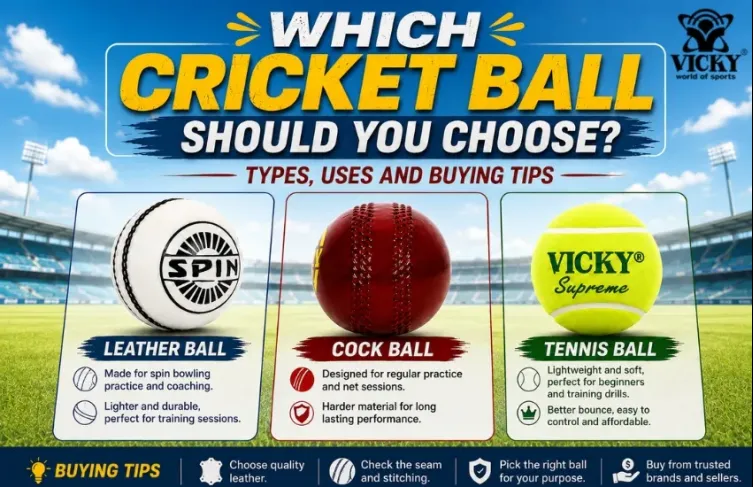
Whether you are a beginner learning the basics, a professional preparing for a competitive match, a coach conducting training sessions, or someone who enjoys recreational cricket, selecting the appropriate ball can make your practice more effective. In this guide, we explain the different types of cricket balls, their uses, and important buying tips to help you make the right choice.
Why Is Choosing the Right Cricket Ball Important?
Cricket balls are designed for different playing conditions and purposes. Their material, weight, hardness, construction, bounce, and outer covering can influence how they perform on the field.
A softer ball may be suitable for beginners and casual games, while a harder ball can provide a more realistic match experience for advanced players. Similarly, a training ball may be designed for repeated practice, whereas a match-quality ball is built to meet more demanding playing requirements.
Before buying a cricket ball, always consider where, how, and by whom it will be used.
1. Cricket Tennis Ball – Ideal for Beginners and Casual Cricket
A Cricket Tennis Ball is a popular option for recreational cricket, beginners, children, street cricket, and general practice. Compared with traditional hard cricket balls, tennis balls are generally easier to handle and can be more comfortable for players who are still developing their basic skills.
Cricket tennis balls are useful for batting practice because players can concentrate on timing, footwork, shot placement, and hand-eye coordination without immediately moving to a harder ball.
Common Uses of Cricket Tennis Balls
· Beginner cricket practice
· Street and park cricket
· Casual matches
· Batting drills
· Basic bowling practice
· Reaction and coordination exercises
· Training sessions for younger players
If your primary goal is recreational cricket or basic skill development, a Cricket Tennis Ball can be a practical option.
2. Cricket Leather Ball – For Competitive Matches and Advanced Practice
A Cricket Leather Ball is the traditional choice for serious and competitive cricket. It generally features a leather outer covering, stitched seam, and a durable internal construction designed for demanding use.
Leather cricket balls are commonly used in club cricket, competitive matches, cricket academies, advanced net sessions, and professional-level training. Their characteristics allow players to practice under conditions that are closer to those experienced during competitive cricket.
A leather ball can behave differently from a tennis ball in terms of weight, bounce, seam, and movement. This makes it particularly valuable for bowlers and batsmen preparing for serious matches.
Common Uses of Cricket Leather Balls
· Competitive cricket matches
· Professional and advanced training
· Cricket academy sessions
· Net practice
· Batting and bowling preparation
· Advanced fielding drills
· Match simulation
When practicing with a hard leather ball, players should use suitable protective equipment, including helmets, pads, gloves, and other safety gear where appropriate.
3. Cricket Cork Ball – Useful for Training and Practice
A Cricket Cork Ball can be a useful option for selected cricket training and practice activities. Cork is commonly used in the internal construction of cricket balls and contributes to their overall feel and bounce.
The performance of a cork-based ball depends on its specific design, covering, weight, and intended application. Therefore, players should check the product specifications before making a purchase.
Cork balls may be useful for batting practice, bowling drills, school cricket, academy sessions, and recreational training depending on their construction.
Common Uses of Cricket Cork Balls
· Cricket training
· Net practice
· Batting drills
· Bowling practice
· School cricket
· Academy training
· Recreational cricket
For players who want a training-focused cricket ball, a suitable cork ball can be considered based on the required specifications.
Cricket Tennis Ball vs. Leather Ball vs. Cork Ball
Understanding the differences between these options makes the buying decision easier.
|
Ball Type |
Best For |
Key Advantage |
|
Cricket Tennis Ball |
Beginners and casual cricket |
Easy to handle and suitable for basic practice |
|
Cricket Leather Ball |
Competitive cricket and advanced training |
More realistic match-style experience |
|
Cricket Cork Ball |
Training and practice |
Suitable for various skill-development drills |
There is no single cricket ball that is perfect for everyone. The best choice depends on your playing level, training objective, age, environment, and type of cricket you play.
How to Choose the Best Cricket Ball?
1. Consider Your Playing Level
Beginners generally benefit from easier-to-handle balls while developing fundamental skills. Advanced players may need a leather ball to prepare for competitive matches.
2. Decide Where You Will Play
For street cricket, parks, recreational games, or informal practice, a tennis ball may be more practical. For professional nets and competitive cricket, a suitable leather ball may be more appropriate.
3. Check Weight and Size
The weight of the ball can influence batting, bowling, and catching. Always check the product specifications and select a ball appropriate for the intended player and level of cricket.
4. Check the Hardness
Hardness is another important factor. Softer options can be useful for beginners and controlled training, while harder balls are generally intended for more advanced play and require appropriate safety precautions.
5. Look at Construction Quality
Check the stitching, outer covering, core construction, seam, and overall finish. A well-constructed cricket ball can provide better consistency and durability during repeated use.
6. Consider Durability
If you are purchasing a ball for frequent training, choose one designed to withstand repeated impact. Durability becomes particularly important for cricket academies, clubs, coaches, and players who practice regularly.
7. Match the Ball to Your Training Goal
Your training objective should influence your choice. For example, a tennis ball can be useful for reaction and timing exercises, while a leather ball can help advanced players become accustomed to competitive match conditions.
Which Cricket Ball Is Best for Batting Practice?
The ideal ball depends on the player’s skill level and training objective.
Beginners can start with a Cricket Tennis Ball to develop timing, balance, footwork, and shot selection. As their skills improve, they can gradually move toward harder training balls.
Advanced batsmen can benefit from practicing with a Cricket Leather Ball, particularly when preparing for competitive matches. It can help them become familiar with the weight, bounce, seam, and pace associated with match conditions.
Which Cricket Ball Is Best for Bowling Practice?
Bowlers can also use different balls for different training goals. Tennis balls can be useful for basic line-and-length practice and recreational bowling. A leather ball is more appropriate for advanced bowlers preparing for competitive cricket.
With a leather ball, bowlers can work on seam position, swing, pace, line, length, and variations under realistic practice conditions.
Tips for Buying Cricket Balls Online
If you are planning to buy cricket balls online, keep these points in mind:
· Check the ball type and intended use.
· Verify weight and size specifications.
· Look for details about material and construction.
· Consider whether the ball is designed for practice or matches.
· Compare durability and quality before purchasing.
· Select a product suitable for your skill level.
· Check the quantity if purchasing balls for a cricket academy or team.
· Before placing your order, carefully review the product details.
Avoid selecting a cricket ball based solely on its price. Quality, intended use, construction, and durability are equally important.
Buy Quality Cricket Balls from Vicky Sports
Choosing the right cricket equipment becomes easier when you understand your specific playing requirements. Vicky Sports provides cricket sports equipment for players, teams, coaches, and cricket enthusiasts looking for products suitable for different playing and training needs.
Whether you are looking for a Cricket Tennis Ball for casual games, a Cricket Leather Ball for competitive practice, or a Cricket Cork Ball for training, selecting the appropriate ball can improve your overall practice experience.
Before buying, consider the type of cricket you play, your skill level, playing environment, and training objectives. The right ball can help you practice more effectively while building confidence and consistency.
Conclusion
So, which cricket ball should you choose? The answer depends on your individual requirements.
A Cricket Tennis Ball is a practical choice for beginners, recreational players, street cricket, and basic training. A Cricket Leather Ball is better suited to competitive cricket, advanced training, and match preparation. A Cricket Cork Ball can be considered for specific practice and training applications based on its construction and specifications.
By understanding the differences between cricket ball types and considering factors such as weight, hardness, construction, durability, and intended use, you can make a smarter buying decision. For cricket equipment and suitable ball options, explore the range available from Vicky Sports and choose a ball that matches your game.